10/28/2026
2013 Toyota Premio G Superior Review Kenya: Performance, Reliability & Buying Guide
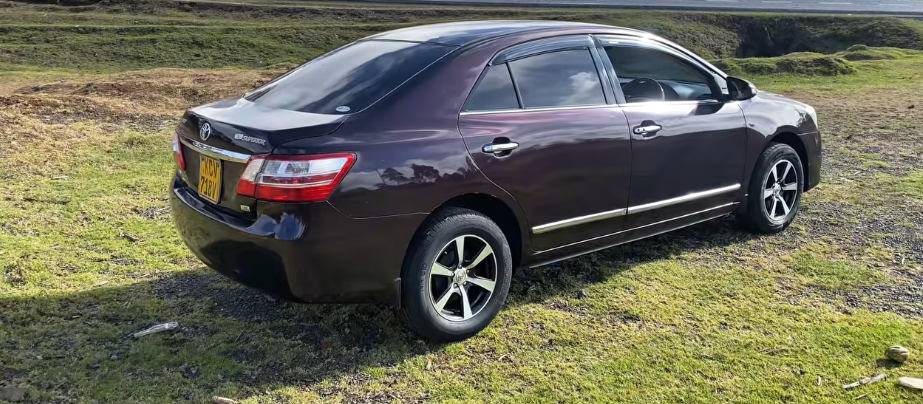
The Toyota Premio needs little introduction in Kenya — it’s one of the most familiar sedans on local roads. The G Superior trim, however, represents the top of the Premio range, distinguished by both its larger engine and a genuinely more feature-rich interior than the entry-level F and X package variants most buyers encounter. This particular unit was scouted and thoroughly checked by our team before being delivered to a client in Kapsabet, giving us genuine long-distance road time with the car rather than a brief showroom impression. The Premio G Superior tends to attract buyers who want a dependable, well-equipped sedan with a bit more highway capability than the standard Premio offers. At 0-60 Motoring, we help buyers make informed vehicle decisions through professional car consultancy and vehicle sourcing, and this review is meant to give you an honest, practical picture of whether this top-trim Premio justifies its price premium. QUICK VEHICLE SUMMARY Make: Toyota Model: Premio G Superior Year: 2013 Engine: 3ZR 2.0L non-turbo petrol Power: 150 hp Torque: 200 Nm Fuel economy: 15 km/L (highway) Drive type: Front-wheel drive, CVT transmission Ideal buyer: Buyers wanting the most powerful, best-equipped Premio variant for mixed highway and city use
EXTERIOR DESIGN
As a common, familiar sedan on Kenyan roads, the Premio’s styling needs little introduction. The G Superior distinguishes itself primarily through its mechanical specification rather than dramatic exterior changes, sharing its general body design with lower trim variants while carrying the badge of Toyota’s top-tier Premio package.
INTERIOR AND COMFORT
This is where the G Superior genuinely separates itself from the more commonly found F and X package variants. Leather seating comes standard, with heated front seats for both driver and passenger — a meaningful comfort upgrade over the comparatively basic entry-level trims that Toyota sedans are often known for. Cruise control is another standout inclusion, particularly useful on roads with strict speed limits, such as the Salgaa stretch on the Nakuru-Eldoret highway where enforcement is notably strict.
These feature additions represent a genuine step up from the typically bland, no-frills reputation Toyota sedans carry, giving buyers who want some comfort and convenience technology a reason to pay the premium for this top trim.
ENGINE AND PERFORMANCE
Powering the G Superior is the 3ZR 2.0-litre non-turbo petrol engine, producing 150 hp and 200 Nm of torque through a CVT transmission — the same engine found in the Toyota Noah, Esquire, Voxy, Harrier, and the top-trim Toyota Allion A20 (the Premio’s mechanical twin).
By Premio standards, this is a genuinely quick car. While this same engine feels notably underpowered in a heavier vehicle like the Harrier, the Premio’s lighter weight gives it a meaningfully better power-to-weight ratio, translating into noticeably stronger real-world acceleration than its siblings using the identical engine. The difference becomes particularly apparent on inclines, where the gap between this 2.0-litre and the entry-level 1.5-litre Premio is substantial.
It’s worth setting realistic expectations here — this isn’t performance car territory in any absolute sense, but for a Toyota Premio specifically, it represents the strongest, most confident highway performer in the lineup, making overtaking noticeably easier than in lower-powered variants.
FUEL ECONOMY AND RUNNING COSTS
Driven conservatively on a long highway trip, this 2.0-litre G Superior returned 15.1 km/L — a genuinely impressive figure that closely matches what the smaller 1.8-litre Premio typically achieves on similar long trips (generally 14–15 km/L). This reveals an important insight: over sustained highway driving, the fuel consumption difference between the 1.8L and 2.0L variants is essentially negligible, since the more powerful engine doesn’t need to work as hard or rev as high to maintain speed.
City driving in heavy traffic tells a different story — the larger engine will generally consume more fuel than the 1.5-litre variant in stop-start conditions, due to increased idling. Buyers should factor their typical driving environment into which engine size makes the most practical sense.
On pricing, a well-kept 2013–2014 Premio in good condition typically requires a budget of around KES 1.4 million. Units priced noticeably lower (around KES 1–1.2 million) in this age bracket should be approached with caution, as they’re unlikely to be in genuinely good mechanical condition — pricing in the local used market closely tracks actual vehicle condition rather than age alone.
RELIABILITY AND COMMON ISSUES
The Premio’s core reputation for reliability holds true across all engine variants — the 1.5L 1NZ-FE, 1.8L 2ZR, and this 2.0L 3ZR are all considered dependable units when properly maintained.
The critical consideration across every Premio variant is the CVT transmission, which is notably unforgiving of aggressive driving. This is explicitly not a car meant to be driven hard — consistent, disciplined driving habits are essential for long transmission life, since aggressive use significantly increases the risk of costly transmission failure, with replacement costs running around KES 200,000.
Equally important is using only genuine, reputable CVT fluid during servicing — sourcing fluid from an official dealer (Toyota Kenya/CFAO) is strongly recommended, since fake or counterfeit CVT fluid is one of the quickest ways to cause transmission failure.
Routine maintenance costs are reasonable: a minor service (oil, oil filter, air filter, cabin filter) costs around KES 11,000 and is due roughly every 8,000 km. Tyres cost approximately KES 6,000–7,000 each, depending on quality. One honest trade-off worth knowing: the Premio uses disc brakes at the front and drum brakes at the rear across all trims, which keeps brake maintenance costs low but delivers less effective overall braking performance than vehicles with disc brakes on all four wheels, such as the Toyota Avensis.
A genuine concern in the local used market is odometer tampering — buyers should be wary of units showing suspiciously low mileage relative to how long they’ve been in Kenya, and should insist on verified service records to confirm genuine mileage history before purchase.
Before purchasing any used vehicle, it is important to verify the mechanical condition, history and ownership background. 0-60 Motoring assists clients through vehicle evaluation and sourcing to reduce the risk of buying problematic cars.
WHO SHOULD BUY THIS CAR?
Buyers wanting the most powerful, best-equipped Premio variant available
Highway-focused drivers needing stronger overtaking power than lower trims offer
Those who value heated leather seats and cruise control as genuine priorities
Disciplined drivers willing to maintain CVT health through sensible driving habits
WHO SHOULD AVOID THIS CAR?
Buyers primarily driving in heavy city traffic who’d benefit more from the 1.5L variant
Aggressive drivers unwilling to adapt their driving style to protect the CVT
Those seeking disc brakes on all four wheels for stronger overall braking performance
Budget-conscious buyers unable to meet the roughly KES 1.4 million threshold for a genuinely clean unit
0-60 MOTORING BUYING ADVICE
Choosing the right car goes beyond finding an attractive price. Factors such as reliability, maintenance costs, fuel economy and suitability for your lifestyle should guide the decision.
At 0-60 Motoring, our team helps customers identify vehicles that match their needs and budget through professional car scouting and consultancy. With odometer tampering being a genuine risk in this specific market segment, verifying authentic mileage and service history before purchase is essential — exactly the kind of due diligence our vehicle evaluation process is designed to handle on your behalf.
COMPETITORS
Toyota Premio 1.8L (X Package) — Widely regarded as the best-balanced Premio variant, offering a strong mix of power, fuel economy and reliability, and the most sought-after trim in the local market.
Toyota Premio 1.5L (F Package) — The most fuel-efficient option for predominantly city/traffic driving, though noticeably underpowered and sluggish when loaded on the highway.
Toyota Mark X / Subaru Legacy / Mazda Atenza (2.5L class) — Offer stronger performance for buyers willing to accept higher fuel costs in exchange for more power.
Each of these alternatives has its own strengths, and the right choice ultimately depends on whether your driving is predominantly highway or city-based, and how much weight you place on features versus straightforward efficiency — an area where professional guidance can help clarify the right fit.
FINAL VERDICT
The 2013 Toyota Premio G Superior is a genuinely well-rounded sedan for buyers who want the most capable, best-equipped version of this reliable, familiar Toyota nameplate. Its 2.0-litre engine delivers surprisingly strong highway performance by Premio standards without sacrificing meaningful fuel economy on longer trips, and its feature set — heated leather seats, cruise control — represents a genuine step up from the brand’s typically basic reputation. The main consideration is price, with genuinely clean units commanding a real premium, and disciplined CVT-friendly driving remains essential regardless of which Premio variant you choose.
If you are considering purchasing a Toyota Premio G Superior or any other vehicle, 0-60 Motoring can help you find a clean, suitable car through our vehicle scouting and consultancy services. Contact our team before making your next purchase decision.
FAQ
Is the Toyota Premio G Superior reliable in Kenya?
Yes, the 2.0L engine is dependable, though the CVT transmission requires disciplined, non-aggressive driving to ensure long-term reliability.
How much fuel does the Toyota Premio G Superior consume?
Real-world highway driving returned around 15.1 km/L, closely matching the fuel economy of the smaller 1.8L variant on long trips.
What is the difference between the Premio F, X, and G Superior trims?
The G Superior offers the largest 2.0L engine and the most features (leather seats, cruise control); the 1.8L offers the best overall balance; the 1.5L is most fuel-efficient in traffic.
How much does a 2013 Toyota Premio G Superior cost in Kenya?
A genuinely clean unit typically requires a budget of around KES 1.4 million; significantly cheaper units in this age range are unlikely to be in good condition.
What should I inspect before buying a used Toyota Premio?
Verify genuine mileage against service records, check CVT health and fluid history, and confirm overall mechanical condition.
Is the Toyota Premio G Superior good for highway driving?
Yes, it’s the strongest-performing Premio variant for highway use, offering noticeably better overtaking power than the 1.5L or 1.8L versions.
Is 0-60 Motoring able to source a Toyota Premio for me?
Yes, our car scouting program can source a Toyota Premio G Superior or comparable sedans based on your specific needs and budget.
Why do Toyota Premio CVT transmissions fail?
Primarily due to aggressive driving habits and the use of counterfeit CVT fluid during servicing rather than genuine, dealer-sourced fluid.