1/1/1970
2019 Nissan Serena e-Power Review Kenya: Reliability, Fuel Economy & Buying Guide
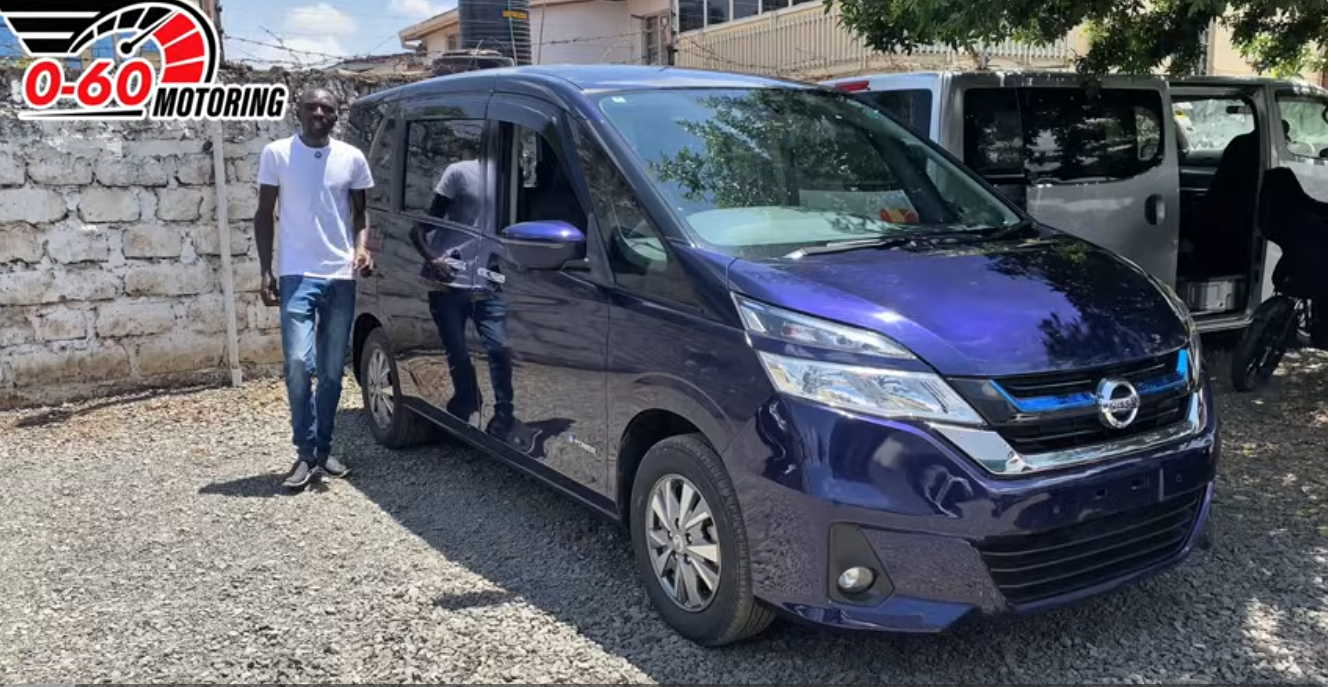
The Nissan Serena has long carried a reputation problem in Kenya — a genuinely practical seven-seater MPV undermined by well-documented CVT transmission issues that have frustrated owners for years. The 2019 e-Power variant represents Nissan's most direct attempt yet to address that reputation, replacing the troublesome CVT entirely with a fundamentally different powertrain design. The Serena e-Power tends to attract family-focused buyers who need genuine seven-seat practicality but have been understandably hesitant about the Serena nameplate's mechanical history. At 0-60 Motoring, we help buyers make informed vehicle decisions through professional car consultancy and vehicle sourcing, and this review is meant to give you an honest, practical assessment of whether this new powertrain genuinely solves the problems that have defined this car's reputation — or simply shifts the risk elsewhere.
QUICK VEHICLE SUMMARY
Make: Nissan
Model: Serena (e-Power)
Year: 2019
Engine: 1.2L petrol (used as a generator, not connected to the wheels)
Power: 130 hp
Torque: 320 Nm
Fuel economy: Up to 20 km/L (real-world)
Drive type: Front-wheel drive, single-speed transmission (no CVT)
Ideal buyer: Families needing a reliable seven-seat MPV, buyers wary of traditional Nissan CVT issues
EXTERIOR DESIGN
Like most MPVs in this segment, the Serena isn't built around styling flair — practicality is the entire point. It shares its general proportions and boxy, family-friendly silhouette with direct rivals like the Toyota Noah, Esquire and Voxy, and the Mitsubishi Delica. Buyers shopping in this segment are generally prioritising interior space and seating configuration over aesthetics, and the Serena delivers on that front without trying to be something it isn't.
INTERIOR AND COMFORT
The cabin offers decent knee room and headroom throughout, with a flat-bottomed multifunctional steering wheel housing media controls and cruise control. A digital display shows speed and vehicle information, though it's worth noting the stock display's graphics quality is fairly basic — buyers wanting a sharper, more modern display may want to budget for an aftermarket upgrade.
This is a genuine seven-seater, with a two-seat second row and a three-seat third row — an important distinction from eight-seater variants of similar MPVs, where the second row typically accommodates three. This layout affects both passenger flexibility and cargo space depending on how you configure the seating for a given trip.
Overall, the interior experience is functional rather than flashy, consistent with what buyers in this segment genuinely want: a comfortable, no-nonsense space to move a family from A to B.
ENGINE AND PERFORMANCE
The e-Power system fundamentally changes how this Serena delivers power. The 1.2-litre petrol engine never drives the wheels directly — instead, it functions purely as a generator, charging a battery that powers an electric motor connected to the wheels. This produces 130 hp and 320 Nm of torque, a notable step up from the standard hybrid Serena's roughly 200 Nm, and because electric motors deliver torque instantly, the e-Power variant feels genuinely punchier in everyday driving, particularly when accelerating out of dips or bumps.
Back-to-back against the conventional hybrid Serena, this additional torque translates into noticeably stronger real-world responsiveness — enough that the e-Power arguably outperforms several direct rivals in this segment on outright acceleration feel, despite modest headline power figures.
FUEL ECONOMY AND RUNNING COSTS
This is one of the e-Power system's strongest selling points: real-world fuel economy of up to 20 km/L, a genuinely impressive figure for a seven-seat family vehicle producing 130 hp and 320 Nm of torque. To put that into perspective, covering 500 km would require roughly 25 litres of fuel — around KES 4,550 at current pump prices, a meaningfully lower running cost than most seven-seater alternatives in this class.
For families doing regular long-distance travel — school runs combined with upcountry trips, for example — this efficiency advantage compounds significantly over time compared to conventional petrol MPVs in the same segment.
In terms of purchase price, the Serena e-Power typically sells for KES 2.1–2.2 million in the Kenyan market, depending on grade, mileage and condition. This positions it as genuinely competitive value against alternatives like the Toyota Noah, Esquire, Voxy and Mitsubishi Delica, which typically start around KES 2.4–2.5 million for a comparable grade, with higher Noah trims like the WXB reaching KES 2.8 million.
RELIABILITY AND COMMON ISSUES
This is the section that matters most for anyone considering a Serena, given the model's history. The e-Power system eliminates the CVT gearbox entirely, replacing it with a single-speed transmission — the same fundamental design already proven in the Nissan Note e-Power. This is a meaningful engineering change, not just a marketing label: traditional CVT-equipped Serenas (and Notes, and X-Trails) have been consistently associated with slipping, jerking and overheating transmission problems, issues that installing aftermarket CVT coolers can only partially mitigate rather than genuinely resolve.
Based on real-world experience sourcing and servicing Note e-Power units, this single-speed transmission design has held up considerably better than the CVT it replaces, and there's reasonable basis to expect that reliability track record to carry over to the Serena e-Power, given the shared underlying technology.
With the transmission risk substantially reduced, the primary maintenance focus shifts to the hybrid battery pack. Buyers should ensure regular servicing at hybrid-capable service centres, since the hybrid system itself requires its own maintenance attention separate from conventional engine servicing. Avoiding water immersion is equally important, as with any hybrid battery system, to prevent damage to the battery and related electronics.
Before purchasing any used vehicle, it is important to verify the mechanical condition, history and ownership background. 0-60 Motoring assists clients through vehicle evaluation and sourcing to reduce the risk of buying problematic cars.
WHO SHOULD BUY THIS CAR?
- Families needing genuine seven-seat practicality with improved reliability over standard Serenas
- Buyers prioritising fuel economy in the MPV segment
- Those wanting stronger real-world acceleration than a conventional hybrid MPV offers
- Buyers open to hybrid technology who want to avoid traditional CVT-related risks
WHO SHOULD AVOID THIS CAR?
- Buyers still cautious about the Serena nameplate's broader reliability reputation, regardless of transmission changes
- Those unwilling to seek out hybrid-specialist servicing for the battery system
- Buyers wanting the cheapest possible entry point in this segment, where standard hybrid or petrol Serenas may cost less
- Anyone regularly driving through flooded or heavily waterlogged roads
0-60 MOTORING BUYING ADVICE
Choosing the right car goes beyond finding an attractive price. Factors such as reliability, maintenance costs, fuel economy and suitability for your lifestyle should guide the decision.
At 0-60 Motoring, our team helps customers identify vehicles that match their needs and budget through professional car scouting and consultancy. A car carrying a mixed reliability reputation like the Serena requires extra diligence before purchase — confirming genuine e-Power specification, checking battery health, and verifying service history are all steps our sourcing and inspection process is specifically designed to handle on your behalf.
COMPETITORS
Toyota Noah / Esquire / Voxy
Widely available and well-regarded alternatives with strong parts availability and resale value, though typically priced higher than the Serena e-Power for comparable grades, and without the same instant-torque hybrid driving character.
Mitsubishi Delica
Offers strong off-road capability in some variants, appealing to buyers needing more than tarmac-only practicality, though generally positioned at a higher price point.
Each of these alternatives has its own strengths, and the right choice ultimately depends on how much weight a buyer places on proven reliability track record versus the Serena e-Power's improved transmission design and stronger fuel economy — an area where professional guidance can help clarify genuine risk versus reward.
FINAL VERDICT
The 2019 Nissan Serena e-Power represents a genuine engineering response to one of the most persistent reliability complaints in this segment. By eliminating the CVT gearbox entirely and borrowing a proven single-speed transmission design from the Note e-Power, Nissan has addressed the mechanical weak point that has defined the Serena's reputation for years. Combined with genuinely impressive fuel economy and strong real-world torque, this is a considerably more compelling proposition than previous Serena generations — though buyers should still approach with the same diligence they'd apply to any used import, given the nameplate's history.
If you are considering purchasing a Nissan Serena e-Power or any other vehicle, 0-60 Motoring can help you find a clean, suitable car through our vehicle scouting and consultancy services. Contact our team before making your next purchase decision.
FAQ
1. Is the Nissan Serena e-Power reliable in Kenya?
It's considerably more promising than previous CVT-equipped Serenas, since it uses a single-speed transmission already proven reliable in the Nissan Note e-Power.
2. How much fuel does the Nissan Serena e-Power consume?
Real-world driving can achieve up to 20 km/L, making it one of the more economical seven-seater MPVs in its class.
3. Does the Nissan Serena e-Power still have CVT problems?
No, the e-Power variant replaces the CVT entirely with a single-speed transmission, directly addressing this common Serena complaint.
4. How much does a Nissan Serena e-Power cost in Kenya?
Typically KES 2.1–2.2 million, depending on grade, mileage and condition.
5. Is the Nissan Serena e-Power better value than the Toyota Noah?
It's generally more affordable for a comparable grade, though the Noah has stronger brand reputation and parts availability in Kenya.
6. What should I inspect before buying a used Nissan Serena e-Power?
Verify genuine e-Power specification, check hybrid battery health and service history, and confirm overall mechanical condition.
7. Is 0-60 Motoring able to source a Nissan Serena e-Power for me?
Yes, our car scouting program can source a Nissan Serena e-Power or comparable MPVs based on your specific needs and budget.
8. Is the Nissan Serena e-Power a good family car?
Yes, it offers genuine seven-seat practicality, strong fuel economy, and an improved reliability profile over standard Serena variants.
INTERNAL LINKS SUGGESTIONS
- Read about Nissan Note e-Power https://0-60motoring.com/blogs/2021-nissan-note-e13-e-power-reviewed-0-60motoring