10/21/2026
2020 Toyota Noah WXB Review Kenya: Reliability, Fuel Economy & Buying Guide
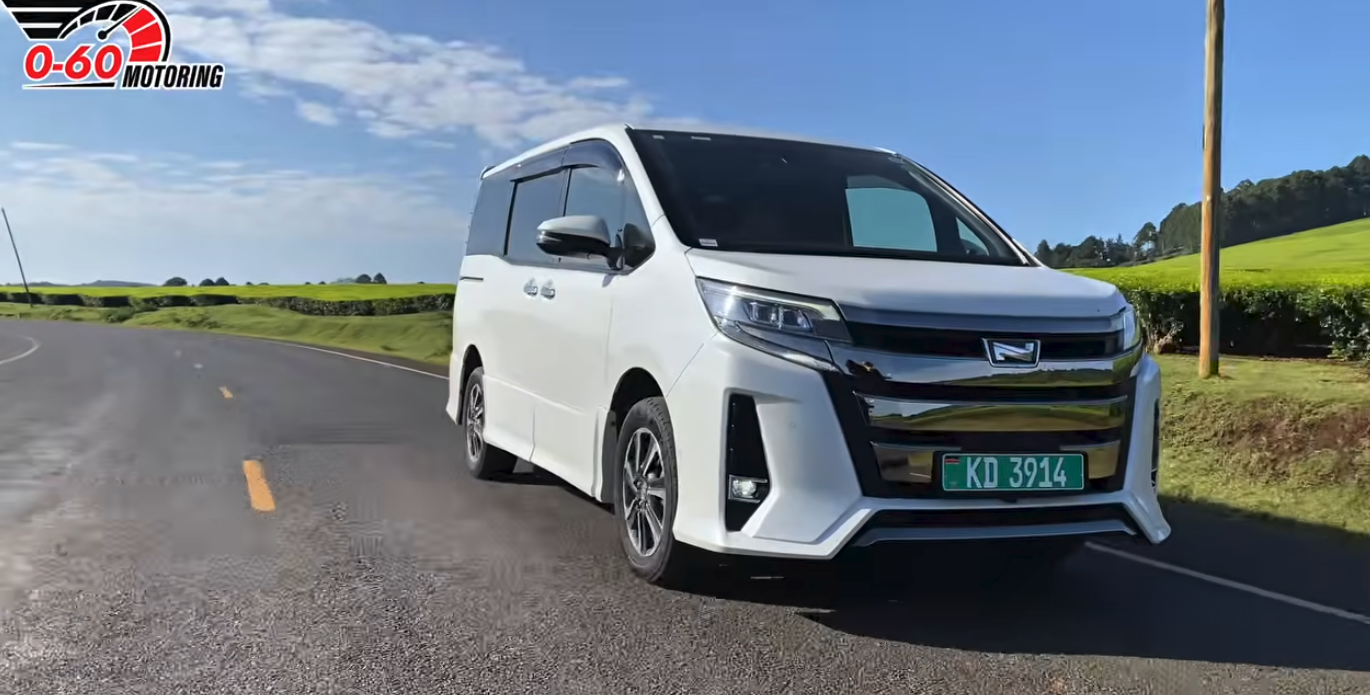
The Toyota Noah has firmly established itself as one of Kenya’s go-to family MPVs, prized less for excitement and more for dependable, no-drama practicality. This particular WXB-trim unit was scouted and thoroughly checked by our team before being delivered over a long-distance road trip to a client in Kisumu — giving us genuine real-world experience with the car under load, on varied road conditions, rather than a brief showroom impression. The Noah tends to attract a very specific kind of buyer: families or PSV operators who value Toyota’s reliability reputation and genuine passenger space over performance or driving excitement. At 0-60 Motoring, we help buyers make informed vehicle decisions through professional car consultancy and vehicle sourcing, and this review is meant to give you an honest, practical picture of what to expect from this popular but increasingly expensive family hauler. QUICK VEHICLE SUMMARY Make: Toyota Model: Noah WXB Year: 2020 Engine: 3ZR 2.0L non-turbo petrol (1.8L hybrid also available) Power: 150 hp Torque: 200 Nm Fuel economy: 13.5 km/L (real-world, loaded) Drive type: Front-wheel drive or all-wheel drive, CVT transmission Ideal buyer: Families needing seven/eight-seat practicality, PSV operators, Toyota reliability-focused buyers
EXTERIOR DESIGN
The Noah shares its underlying platform with the Toyota Voxy and Esquire — essentially the same vehicle with different styling treatments on the headlamps, grille, rear design and badging. The WXB trim represents Toyota’s top-of-range Noah package, distinguished from entry-level variants by fog lamps, a full body kit, distinct headlamp design, and 16-inch alloy wheels, compared to the steel wheels and lack of fog lamps found on base models.
A practical feature worth highlighting: the WXB comes with double powered sliding doors on both sides, making entry and exit genuinely convenient for families loading children or cargo in tight parking situations.
For buyers wanting to confirm drivetrain configuration without physically inspecting the underside, the chassis code offers a reliable shortcut — ZRR80 indicates front-wheel drive, while ZRR85 confirms all-wheel drive, following the same identification logic used across other Toyota models like the Mark X.
INTERIOR AND COMFORT
The WXB’s main interior distinction from standard Noah variants is genuine leather seating (often covered with fabric slipcovers by owners, as seen on this unit, to preserve the leather underneath). Beyond that, the cabin includes a comprehensive safety and convenience package: lane-keeping assist, front collision mitigation, auto headlamps, auto start-stop for fuel saving in traffic, and cruise control — genuinely useful for the long highway stretches this car is often used for.
A larger touchscreen display than standard Noah variants is fitted, though buyers should note that as an ex-Japan import, its native functionality may be limited, and some owners opt to swap in an aftermarket unit for expanded features.
Cargo and passenger space is, unsurprisingly, this car’s strongest selling point — a foldable third row allows for genuinely substantial luggage capacity when needed, easily swallowing family trip loads that would overwhelm a standard sedan or smaller crossover. Depending on second-row configuration, the Noah seats either seven (bucket-style middle seats) or eight (bench-style middle seat) passengers.
ENGINE AND PERFORMANCE
This non-hybrid variant uses the 3ZR 2.0-litre non-turbo petrol engine — the same unit found in the Toyota Harrier ZSU, Premio G Superior, and Allion A20 — producing 150 hp and 200 Nm of torque through a CVT transmission. A 1.8-litre hybrid variant is also available for buyers prioritising fuel efficiency over this engine’s slightly stronger real-world pulling power.
It needs to be said plainly: this is not a performance vehicle, and buyers should set expectations accordingly. The CVT delivers smooth, unhurried acceleration well suited to highway cruising, but the combination of modest torque and CVT gearing means uphill sections require noticeably more engine revving to maintain momentum — a characteristic shared by most non-turbo CVT MPVs in this class, but worth understanding before purchase.
Compared directly to segment rivals, the Noah falls behind on outright performance — the Nissan Serena e-Power offers considerably stronger torque and quicker real-world acceleration, while the Mitsubishi Delica and Honda Step Wagon are also generally quicker. Buyers specifically prioritising performance within this MPV segment should look toward those alternatives instead.
In stock form, the factory suspension is notably soft, absorbing road imperfections comfortably — though many Kenyan owners fit medium-duty springs to raise ride height slightly and protect the underbelly on rougher upcountry roads, a modification visible on many locally-used examples including this one.
FUEL ECONOMY AND RUNNING COSTS
Driven gently with a loaded cabin and some cargo weight, this non-hybrid 2.0-litre returned approximately 13.5 km/L on a genuine long-distance road trip — a reasonable figure for a family MPV of this size carrying real-world weight. Buyers specifically wanting better fuel economy should consider the 1.8-litre hybrid variant, which delivers meaningfully stronger efficiency than this non-hybrid configuration.
On pricing, the market has shifted dramatically in recent years. Fully-loaded Noah and Voxy units that sold for around KES 2.2–2.3 million in 2022–2023 now regularly exceed KES 2.9–3 million for a comparable grade-4.5 unit with genuine low mileage — driven significantly by rising demand from the PSV (public transport) sector. Hybrid variants command an even higher premium, with fully-loaded hybrid Noahs reaching around KES 3.3 million.
Buyers specifically choosing the WXB trim over standard variants should weigh the roughly KES 300,000–500,000 price premium against how much they genuinely value the leather seats, body kit and fog lamps — for buyers prioritising budget over aesthetics, the standard Noah delivers the same core reliability and practicality at meaningfully lower cost.
RELIABILITY AND COMMON ISSUES
This non-hybrid 2.0-litre engine has a strong reputation for straightforward, dependable reliability under normal maintenance — it’s not a mechanically complex unit, and routine servicing keeps it running well over the long term.
The CVT transmission is the area requiring the most buyer caution. While not the most robust gearbox on the market, Toyota’s CVTs generally hold up well when properly maintained and driven sensibly. The real risk comes from how these cars are frequently used — particularly on routes like Nairobi–Kisumu, where some owners drive loaded Noahs aggressively, attempting to keep pace with more powerful vehicles like turbocharged Subarus or diesel CX-5s. This kind of driving significantly accelerates CVT wear, and buyers considering a locally-used unit should treat this as a genuine red flag to investigate during pre-purchase inspection.
A failed CVT transmission is a costly repair, running around KES 250,000 — making thorough gearbox diagnosis during pre-purchase inspection absolutely essential rather than optional. Verifying service history, particularly CVT fluid change intervals, and conducting a proper mechanical inspection are the clearest ways to avoid inheriting a previous owner’s problems.
Before purchasing any used vehicle, it is important to verify the mechanical condition, history and ownership background. 0-60 Motoring assists clients through vehicle evaluation and sourcing to reduce the risk of buying problematic cars.
WHO SHOULD BUY THIS CAR?
Families needing genuine seven or eight-seat practicality
PSV operators wanting a dependable, well-regarded Toyota platform
Buyers prioritising reliability and space over performance
Those wanting WXB-specific extras like leather seating and powered sliding doors
WHO SHOULD AVOID THIS CAR?
Buyers seeking genuine driving performance or engagement
Those unwilling to budget for thorough CVT inspection before purchase
Budget-conscious buyers who don’t specifically need WXB-trim extras
Buyers wanting the best possible fuel economy (consider the hybrid variant instead)
0-60 MOTORING BUYING ADVICE
Choosing the right car goes beyond finding an attractive price. Factors such as reliability, maintenance costs, fuel economy and suitability for your lifestyle should guide the decision.
At 0-60 Motoring, our team helps customers identify vehicles that match their needs and budget through professional car scouting and consultancy. With CVT health being the single biggest risk factor on this platform, especially given how some units are driven on busy routes, thorough pre-purchase inspection isn’t optional — it’s exactly the kind of verification our vehicle evaluation process is built to handle before you commit your money.
COMPETITORS
Nissan Serena e-Power — Offers considerably stronger performance and torque, making it the better choice for buyers wanting a quicker, more responsive MPV.
Mitsubishi Delica — Generally quicker and more capable, particularly in diesel form, appealing to buyers wanting more power alongside MPV practicality.
Honda Step Wagon — Another rival offering stronger real-world performance than the standard Noah, worth cross-shopping for performance-minded buyers.
Each of these alternatives has its own strengths, and the right choice ultimately depends on how much weight a buyer places on Toyota’s reliability reputation and resale value versus genuinely stronger performance from rivals — an area where professional guidance can help clarify the right fit.
FINAL VERDICT
The 2020 Toyota Noah WXB does exactly what it’s designed to do: move a family or group of passengers comfortably and reliably from point A to B, backed by Toyota’s dependable reputation and genuine practicality. It won’t excite anyone behind the wheel, and rising demand — particularly from the PSV sector — has pushed pricing considerably higher than just a few years ago. For buyers specifically wanting dependable Toyota ownership and genuine space, however, it remains a solid choice, provided the CVT has been properly cared for.
If you are considering purchasing a Toyota Noah, Voxy, Esquire, or any other vehicle, 0-60 Motoring can help you find a clean, suitable car through our vehicle scouting and consultancy services. Contact our team before making your next purchase decision.
FAQ
Is the Toyota Noah reliable in Kenya?
Yes, the 2.0L engine is dependable under normal maintenance, though the CVT transmission requires careful inspection, especially on units driven aggressively.
How much fuel does the Toyota Noah consume?
Real-world driving with a load returned around 13.5 km/L; the 1.8L hybrid variant offers better efficiency.
What is the difference between the Toyota Noah, Voxy and Esquire?
They are mechanically identical vehicles with different styling on the headlamps, grille, rear design and badging.
How much does a 2020 Toyota Noah WXB cost in Kenya?
Expect to pay upwards of KES 2.9–3 million for a low-mileage, grade-4.5 unit, with prices rising due to strong PSV demand.
How do I know if a Toyota Noah is front-wheel or all-wheel drive?
Check the chassis code — ZRR80 indicates front-wheel drive, while ZRR85 indicates all-wheel drive.
What should I inspect before buying a used Toyota Noah?
Thoroughly diagnose the CVT transmission, verify fluid change history, and check for signs of aggressive driving or thrashing.
Is 0-60 Motoring able to source a Toyota Noah for me?
Yes, our car scouting program can source a Toyota Noah, Voxy, Esquire, or comparable MPVs based on your specific needs and budget.
Is the Toyota Noah WXB worth the extra cost over the standard Noah?
It depends on priorities — the WXB adds leather seats, a body kit and fog lamps for roughly KES 300,000–500,000 more, with no performance difference.