7/11/2026
Toyota Harrier Review Kenya (2003–2012): Reliability, Fuel Economy & Buying Guide
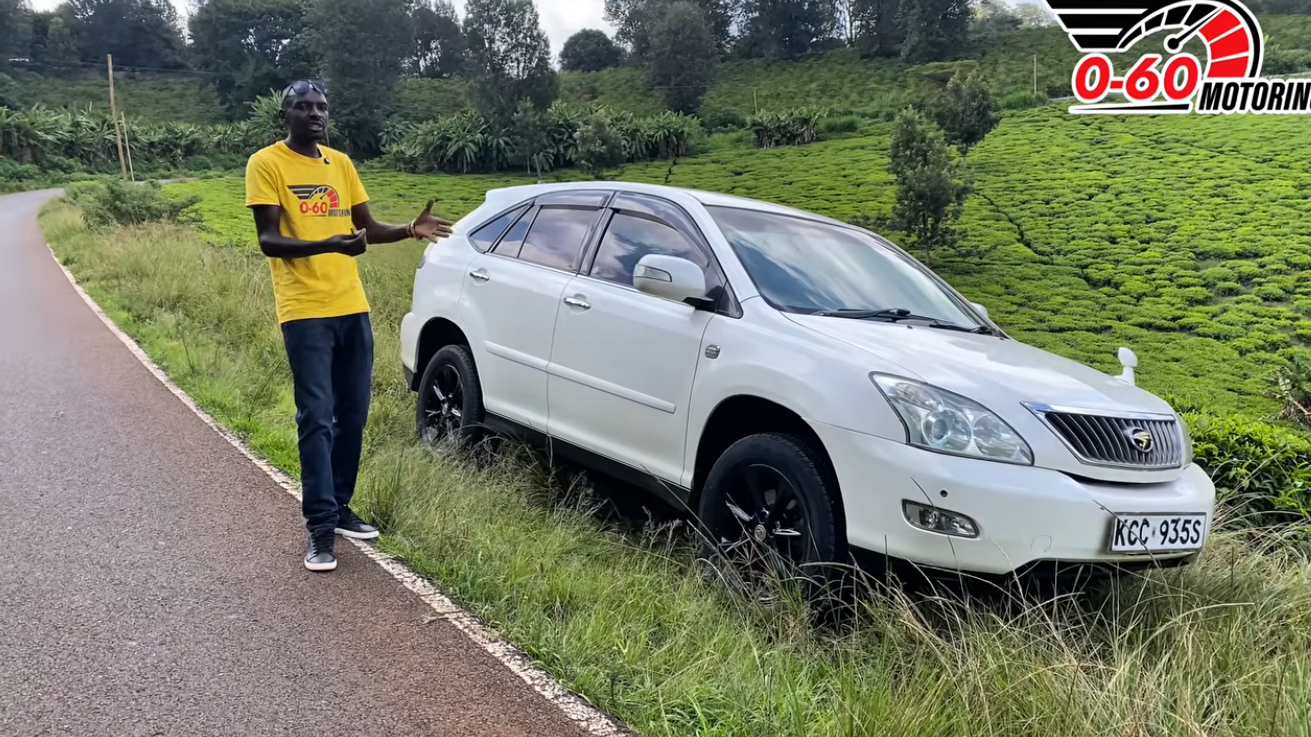
Few crossovers are as instantly recognisable on Kenyan roads as the Toyota Harrier, affectionately nicknamed "mama" or "Harrier" in local motoring circles. Despite this nickname's ladies-oriented association, the reality is far more practical — this is a genuinely capable, dependable crossover that has earned its widespread popularity across Kenya, Uganda and Tanzania through sheer reliability rather than any gender-specific appeal.This generation of the Harrier, produced between 2003 and 2012, shares notable design DNA with the second-generation Lexus RX, making it an interesting proposition for buyers who want a premium-adjacent look without the premium price tag. The Harrier tends to attract buyers who prioritise long-term dependability, family practicality and manageable running costs over outright performance or flashy styling. At 0-60 Motoring, we help buyers make informed vehicle decisions through professional car consultancy and vehicle sourcing, and this review is meant to give you an honest, practical breakdown of what to expect from this long-running favourite.
QUICK VEHICLE SUMMARY
Make: Toyota
Model: Harrier
Year: 2003–2012 (this generation)
Engine: 2.4L 2AZ 4-cylinder petrol (3.0L V6, 3.5L V6, and 3.3L hybrid also available)
Power: 160 hp
Torque: 220 Nm
Fuel economy: 8–11 km/L (city to highway)
Drive type: Front-wheel drive or four-wheel drive, 5-speed automatic transmission
Ideal buyer: Families, reliability-focused buyers, those wanting a practical mid-size crossover
EXTERIOR DESIGN
The Harrier's body design has aged remarkably well, and this is one of its most underrated strengths. It's genuinely difficult to find a poorly preserved example in the used market, as the body construction from this generation has proven durable enough that even 2003–2004 units can look better than considerably newer vehicles in terms of overall body integrity.
Sharing styling cues with the pre-2009 Lexus RX (300, 350, and some 400 variants), the Harrier strikes a middle ground in size — neither as bulky as a Land Cruiser Prado, nor as compact as a hatchback-based crossover — making it a genuinely versatile size for varied Kenyan driving conditions. Ground clearance is generous enough to handle upcountry roads with confidence, particularly on four-wheel-drive variants.
Buyers wanting similar capability without the Harrier's specific nickname association might also consider the Toyota RAV4 or Vanguard, which share significant mechanical and design similarities.
INTERIOR AND COMFORT
The Harrier's cabin is intentionally minimalist — this isn't a car chasing luxury-brand comparisons, and buyers should set expectations accordingly. What it does deliver is solid day-to-day functionality: comfortable front seating, a genuinely practical trunk space, and an adjustable second-row seat that lets owners balance rear legroom against cargo capacity depending on need.
One detail worth noting: many Harriers carry their spare wheel inside the cargo area rather than underneath the vehicle, a deliberate choice to reduce theft risk — worth factoring into your cargo space expectations when comparing this car to rivals that mount the spare externally.
Sound insulation stands out as a genuine strength compared to closely related Toyota models like the RAV4 and Vanguard, giving the Harrier a noticeably quieter, more refined cabin experience at highway speeds — a meaningful point of differentiation within this family of vehicles.
ENGINE AND PERFORMANCE
The most common engine found in the Kenyan market is the 2.4-litre 2AZ 4-cylinder petrol, producing 160 hp and 220 Nm of torque through a 5-speed automatic transmission. This is far from a performance-oriented setup — acceleration is unhurried, though most buyers in this segment are unlikely to find it lacking for everyday use once up to cruising speed.
Buyers wanting genuinely stronger performance should look toward the V6 variants — badged 300G (3.0L) or 350G (3.5L) — though these come with a corresponding increase in fuel consumption. A 3.3-litre hybrid variant also exists and offers both better performance and improved fuel economy compared to the standard 2.4-litre, though availability in the local market is limited enough that finding one requires patience.
Handling reflects the car's high-riding crossover design — noticeable body roll through corners is expected, and this isn't a vehicle built for spirited cornering. Front-wheel-drive variants perform well on tarmac but can struggle with traction off-road, making the four-wheel-drive version the clearly better choice for buyers who regularly encounter rough or ungraded roads.
FUEL ECONOMY AND RUNNING COSTS
Fuel consumption should not be a primary purchasing factor for this car. In Nairobi traffic, expect around 8 km/L, improving to roughly 10–10.5 km/L on longer highway drives. These figures are consistent with directly comparable vehicles in this class — the Toyota RAV4, Vanguard, Honda CR-V RE4, Subaru Forester SH and Suzuki Escudo all return similar numbers with comparable engines, so this isn't a Harrier-specific weakness but rather a characteristic of this entire vehicle segment.
Buyers should budget accordingly, understanding that this class of mid-size crossover trades fuel efficiency for space, ground clearance and overall practicality.
In terms of purchase price, the Harrier commands a premium even in older examples — 2004–2005 models typically start north of KES 1 million, while well-kept 2011–2012 examples can reach KES 1.65–1.7 million. Interestingly, condition matters more than age in the local used market, meaning a well-maintained 2011 unit can sometimes be more affordably priced than a poorly kept 2008 model. Generally, Harriers sit slightly above comparable crossovers like the CR-V or Subaru Forester SH in pricing, reflecting the broader market premium placed on the Toyota badge in Kenya.
RELIABILITY AND COMMON ISSUES
Reliability is the Harrier's calling card, and it's well-earned — examples from 2003–2004 remain in regular daily use across Kenya with minimal issues, a genuine testament to Toyota's engineering during this era.
The primary mechanical consideration is the 2.4-litre 2AZ engine's known tendency toward oil consumption at higher mileages, typically caused by wearing seals and piston rings. This is the same engine shared with the RAV4 and Vanguard, so it's a known quantity across this model family rather than a Harrier-specific flaw. Buyers should specifically check for oil consumption issues during pre-purchase inspection, as a unit that doesn't exhibit this problem is otherwise considered essentially trouble-free — transmission reliability is strong, and the engine itself is robust when oil consumption isn't a factor.
Before purchasing any used vehicle, it is important to verify the mechanical condition, history and ownership background. 0-60 Motoring assists clients through vehicle evaluation and sourcing to reduce the risk of buying problematic cars.
WHO SHOULD BUY THIS CAR?
- Families needing a practical, reliable mid-size crossover
- Buyers prioritising long-term dependability over performance
- Those wanting Lexus RX-adjacent styling at a more accessible price
- Buyers planning mild off-road use (with the four-wheel-drive variant)
WHO SHOULD AVOID THIS CAR?
- Buyers frequently driving rough or ungraded roads who choose the front-wheel-drive variant
- Those prioritising fuel economy above other considerations
- Buyers wanting genuinely sporty handling or performance
- Anyone expecting a premium, feature-rich interior experience
0-60 MOTORING BUYING ADVICE
Choosing the right car goes beyond finding an attractive price. Factors such as reliability, maintenance costs, fuel economy and suitability for your lifestyle should guide the decision.
At 0-60 Motoring, our team helps customers identify vehicles that match their needs and budget through professional car scouting and consultancy. A car with the Harrier's reputation still requires careful inspection — particularly around oil consumption in the 2AZ engine — to ensure you're getting a genuinely sound example rather than one that will disappoint down the line.
COMPETITORS
Toyota RAV4 / Vanguard
Close mechanical relatives sharing the same 2.4L engine and similar reliability characteristics, though with noticeably less sound insulation than the Harrier.
Honda CR-V (RE4)
A comparably reliable alternative with similar fuel economy figures, typically priced slightly below the Harrier in the local market.
Subaru Forester SH
Offers stronger off-road capability through standard all-wheel drive, with comparable fuel consumption, though generally positioned at a lower price point than the Harrier.
Each of these alternatives has its own strengths, and the right choice ultimately depends on how much weight a buyer places on the Toyota badge premium versus comparable practicality at a potentially lower price — an area where professional guidance can help clarify genuine value differences.
FINAL VERDICT
The Toyota Harrier remains a genuinely sound choice for buyers seeking a practical, dependable mid-size crossover with a proven track record on Kenyan roads. Its fuel economy and interior styling won't excite anyone, but its reliability, distinctive Lexus-adjacent design, and family-friendly practicality continue to justify its enduring popularity and premium pricing relative to comparable crossovers. For buyers prioritising peace of mind over performance, it's a car that consistently delivers on its core promise.
If you are considering purchasing a Toyota Harrier or any other vehicle, 0-60 Motoring can help you find a clean, suitable car through our vehicle scouting and consultancy services. Contact our team before making your next purchase decision.
FAQ
1. Is the Toyota Harrier reliable in Kenya?
Yes, it has a strong reputation for reliability, with the main consideration being oil consumption in the 2.4L 2AZ engine at higher mileages.
2. How much fuel does the Toyota Harrier consume?
Expect around 8 km/L in city traffic and 10–10.5 km/L on highway drives, consistent with comparable crossovers in this class.
3. Should I buy a front-wheel-drive or four-wheel-drive Toyota Harrier?
Four-wheel drive is recommended for buyers who frequently drive on rough or ungraded roads; front-wheel drive performs well on tarmac only.
4. How much does a Toyota Harrier cost in Kenya?
Prices range from around KES 1 million for earlier models to KES 1.65–1.7 million for well-kept later batches (2011–2012).
5. What is the main issue to watch for with the Toyota Harrier?
Oil consumption in the 2.4L 2AZ engine at higher mileages is the primary mechanical concern to inspect for.
6. Is the Toyota Harrier good for families?
Yes, it offers generous trunk space, adjustable rear seating, and reliable day-to-day practicality suited to family use.
7. Is 0-60 Motoring able to source a Toyota Harrier for me?
Yes, our car scouting program can source a Toyota Harrier or similar crossovers based on your specific needs and budget.
8. What should I inspect before buying a used Toyota Harrier?
Check for oil consumption in the engine, confirm drivetrain type (2WD vs 4WD) matches your needs, and verify overall service and ownership history.